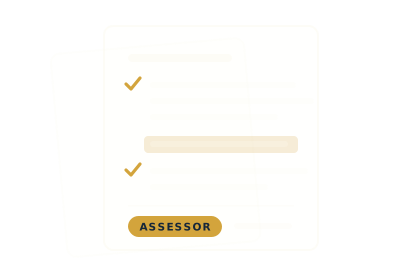
How a batch moves through Apollo
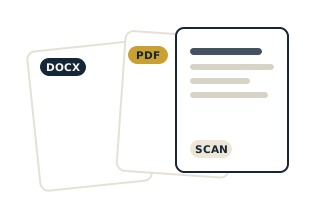
Drop the batch in
Straight from the LMS export, an email, or a scanner, just as they were submitted and matched to unit and task automatically.
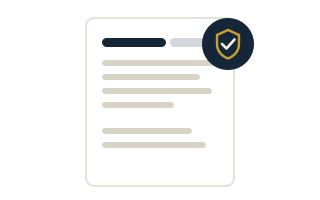
Names come off first
Identifiers are stripped, and painted out of scans, on the trainer’s machine before anything is sent. Where that can’t be done reliably, it waits for the assessor’s OK.
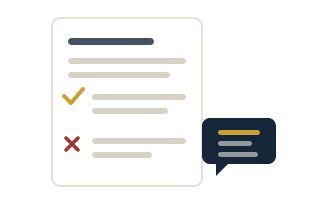
Drafted against your standard
Read against the task brief, marking guide, sample answers and your assessors’ standing guidance. Ticks and crosses land where the evidence sits, feedback attached.

Signed off, handed back, cleared
Your assessor confirms, edits or overrules every mark. Each student gets their annotated document back with the assessor’s name on it, and the batch clears. Nothing is stored.
What a comment actually says.
A scenario task can’t be judged from the marking guide alone. Apollo reads the task brief, the unit material, the sample answers and the guide, and writes every comment against all four.
It quotes the work
Each judgment points at what the student actually wrote. Nothing is credited that is not on the page, and nothing is marked down that is.
It names the requirement
Not a vague ask for more detail, but the guide’s own wording, word count included: it asks for 100 to 150 words; about 60 have been written.
It points to the standard
Where the unit has a sample or model answer, the comment refers to it, so the student can see what a sufficient answer looked like.
It says what to change
Every comment ends with the specific addition or correction that would make the answer sufficient, in the situation the task set rather than in general.
It maps to the criteria
Evidence is set against the performance criteria the guide names, in page order. Where it names none, against the requirements it does state.
Generic is not full credit
Correct but ignoring the scenario doesn’t pass on correctness alone. Short but applying to the scenario isn’t marked down for length.